
Takeaway Containers for Food Halls & Multi-Vendor Spaces – Unified Look, Reliable Heat Protection
The Power of Unified Packaging
A customer strolls through a bustling food hall, picking noodles from one stall, grilled chicken from another, and dessert from a third.
The menus are different. The vendors are different. Yet when the takeaway orders sit side by side, a sense of connection emerges.
That is the advantage of choosing the right takeaway containers for food halls and multi‑vendor spaces. Packaging does more than hold food — it creates consistency, elevates the customer experience, and streamlines daily operations.
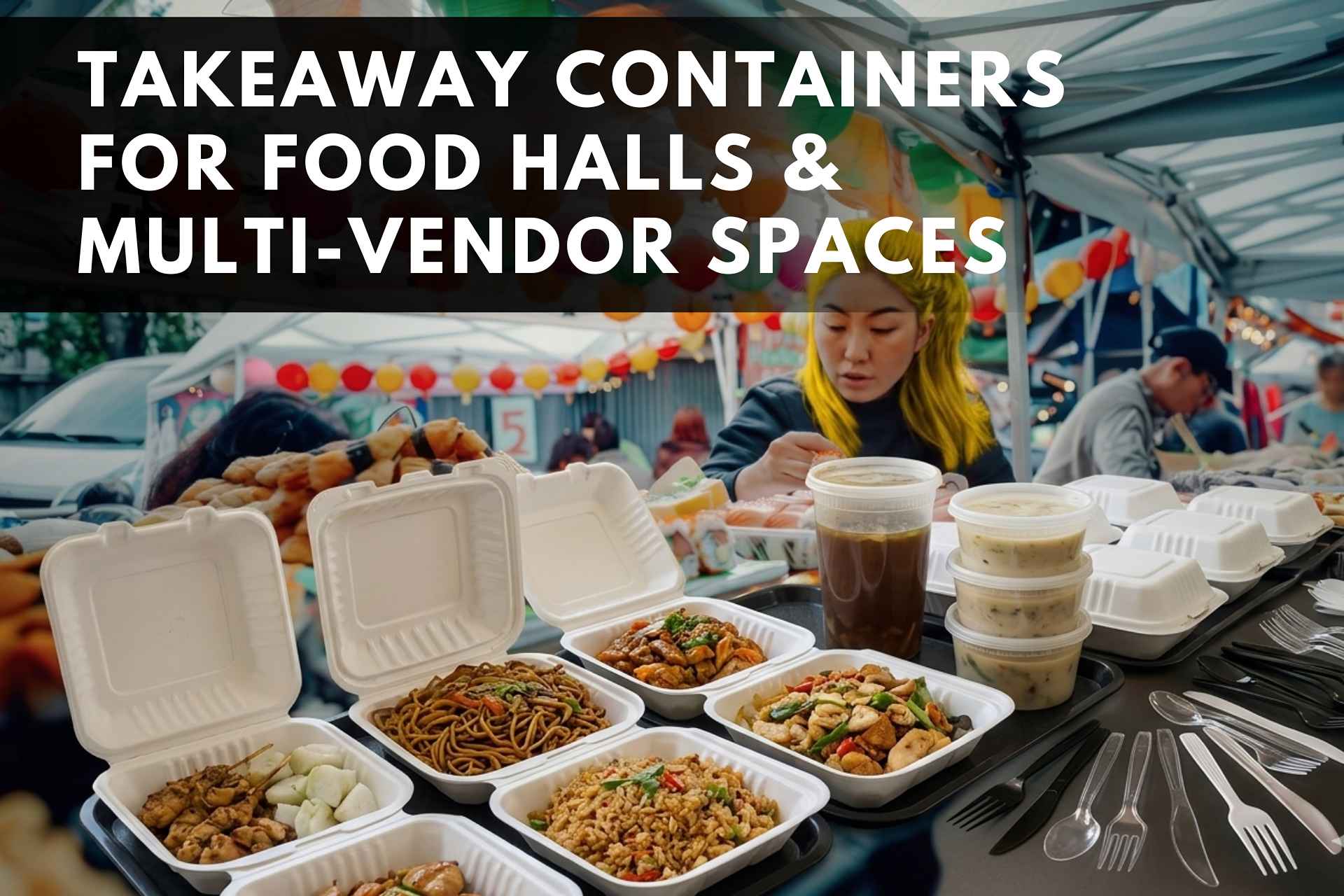
Why Packaging Gets Complicated in Food Halls
Running a single food stall is already demanding. Multiply that by ten, twenty, or more independent vendors under one roof, and complexity skyrockets.
- One vendor sells rice dishes.
- Another serves noodles.
- A third specializes in fried chicken, burgers, or street food.
Each has unique packaging needs — but the customer experience belongs to the food hall as a whole. This creates common challenges:
- Disconnected look: Different containers make the hall appear less organized.
- Heat protection issues: Poorly chosen containers lead to leaks, crushed food, or messy takeaway bags.
- Operational inefficiency: Vendors struggle with storage, stacking, and inventory management.
How Shared Packaging Creates a Unified Experience
Eco-friendly packaging isn’t just good for the planet — it’s good for business. Studies show customers are more likely to support food vendors that prioritize sustainability. Compostable containers can become a unique selling point that differentiates your truck from competitors.
- Withstand reheating without warping.
- Ideal for dishes customers may want to reheat later.
- Lightweight yet durable, perfect for high-volume service.
The balance is simple: individual vendor identity + collective food hall consistency.
This makes the entire space feel more professional and coordinated.
Packaging as Part of the Food Hall Brand
Customers rarely say, “This food hall has excellent packaging.” But they notice when everything feels organized.
Just like signage, menus, and uniforms, packaging contributes to brand perception. A customer carrying your container beyond the hall — to the office, home, or a friend’s house — is carrying a piece of your brand story.
Solving Common Food Hall Packaging Problems
A smart packaging strategy begins with practical questions:
- Food types: Rice, noodles, curries, fried food, and desserts require different solutions.
- Heat handling: Containers must withstand hot meals packed straight from the kitchen.
- Transport conditions: Meals may travel minutes or half an hour — packaging must hold up.
- Storage efficiency: Limited stall space demands stackable, easy‑to‑store containers.
Shared Packaging = Bulk Purchasing Power
When multiple vendors coordinate packaging, purchasing becomes easier and more cost effective.
- Collective orders increase volume and reduce unit costs.
- Inventory planning becomes centralized and predictable.
- Vendors spend less time worrying about running out of containers.
For operators, this small improvement saves significant administrative effort.
Extending the Model to Markets & Food Courts
The same principle applies to market food packaging, collective kitchens, and temporary food events.
A simple framework might include:
- One or two standard containers for main meals
- Smaller options for sides or snacks
- Secure lids for takeaway transport
- Consistent packaging guidelines
- Optional branding stickers or labels
- Centralized bulk purchasing
This keeps the system simple while preserving vendor personality.
What Changes When Packaging Is Standardized
Picture a busy Saturday evening.
Before: Vendors order different containers from different suppliers. Deliveries arrive late, storage is chaotic, and takeaway orders look mismatched.
After: A shared system ensures predictable supply, easier storage, and consistent presentation.
The food hasn’t changed. The vendors haven’t changed. But the operation feels smoother — because packaging has become part of the food hall’s operating system.
Choosing Packaging That Works Across Stalls
The best solution isn’t the container with the most features. It’s the one that works reliably across everyday situations.
Operators should evaluate:
- Consistency – Can multiple vendors use the same range?
- Practicality – Is it suitable for common menu items?
- Heat handling – Can it manage hot meals effectively?
- Storage – Is it stackable and space‑efficient?
- Purchasing – Can it be ordered in bulk?
- Branding – Can vendors still personalize it?
- Customer experience – Does food arrive neat and presentable?
Packaging That Connects Vendors
Food halls thrive on variety. Customers come for noodles, grilled meats, desserts, and more. Unified packaging doesn’t erase that diversity — it subtly connects it.
Each vendor retains identity, but together they present a cohesive destination. Small details like packaging often shape the overall customer experience.
Ready to Build a More Consistent Takeaway System?
For food halls, collective vendors, and multi‑stall food courts, packaging must work at both the individual and collective level.
The right takeaway containers help vendors handle hot food confidently, simplify storage and purchasing, and create a consistent presentation across the space.
Most importantly, they allow independent vendors to collaborate without losing their uniqueness.
Explore vendor‑friendly takeaway packaging and find a practical range that works across different menus, vendors, and occasions.